Nick Barker, Professor
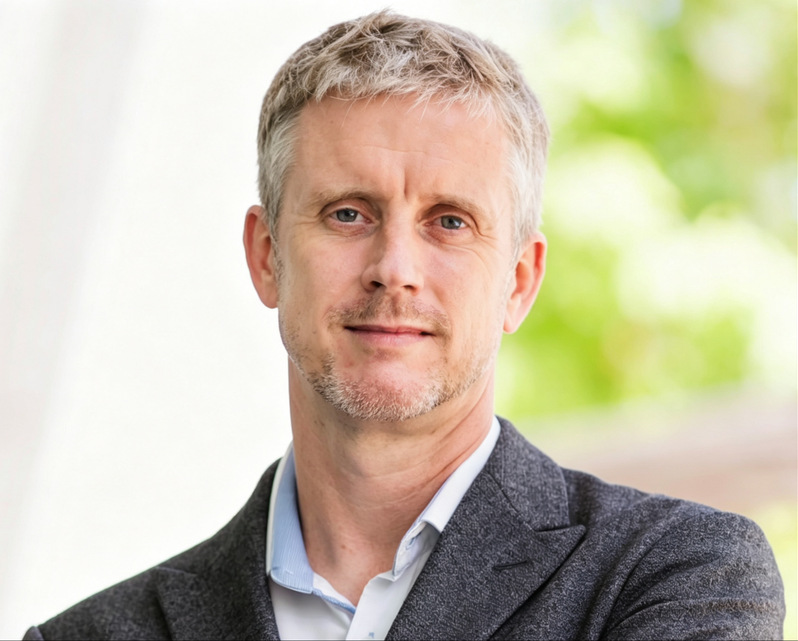
Nick Barker, Professor, Deputy Executive Director.
He is currently Deputy Executive Director at A-STAR IMCB and hold concurrent appointments as an adjunct Professor at the Yong Loo Lin School of Medicine, NUS, Singapore and an honorary Professor at the University of Newcastle, Australia.
Research Interests:
His research group at IMB employs mouse models and ex vivo organoid culture technologies to study the role of Lgr5+ stem cells in driving epithelial homeostasis, repair and disease. In parallel they employ expression profiling of Lgr5+ stem cells from the gastrointestinal tract to identify novel surface stem cell marker that facilitate the isolation of human stem cells from the stomach for regenerative medicine applications in the clinic. This has resulted in identification of Aqp5 as a novel membrane marker of mouse and human and gastric stem cells and established pyloric stem cells as a major source of gastric cancer in the distal stomach. They have also succeeded in generating the first mouse model of advanced human gastric cancer for use in identifying new biomarkers and drug targets that can potentially be used to improve diagnosis and treatment of gastric cancer in the clinic. More recently, they have developed novel stem cell Cre drivers that facilitate regional targeting of key mutations in the colon for generation of physiologically accurate models of proximal/distal colon cancer and a 4-NQO-driven mouse model of ESCC that is revealing key insights into Lgr6+ stem cells in cancer progression.
International Standing:
He has >44,000 citations over my entire career with an “h-index” of 67 (Web of Science). His research is consistently published in the highest standing journals with a general focus (Science, Nature, Cell) and the top-tier journals for specific disciplines (e.g. Cell Stem Cell, Nature Cell Biology, Gastroenterology).
One of his papers (Cell Stem Cell 6:25) was short-listed for the highest impact paper of 2010 by Cell Stem Cell Readers and he was nominated for the ISSCR 2015 McEwen Award for Innovation.
He was nominated for the prestigious “Innovators in Science Award 2018” co-hosted by Takeda pharmaceutical and the New York Academy of Sciences.
Contribution to Field of Research:
Link between Wnt signal transduction pathway and colon cancer. His post-doc in the Clevers laboratory led to three seminal papers. The first two were published in 1997 [Barker et al., Science 275:1784 (>3,000 citations) and Morin et al., Science 275:1787 (>3,500 citations), which causatively linked Tcf/β-catenin transcription to colon cancer. The third was published in 1999 [Korinek, Barker et al., Nature Genetics 19:279 (>1,300 citations)] that showed Tcf is necessary for the intestinal epithelium stem cells. This body of work underpins his venture into the biomedical industry at Semaia Pharmaceuticals, which resulted in 3 patents as discoverer.
Identified Lgr5 as a marker of adult stem cells. His return to the Clevers laboratory in 2006 as Staff Scientist led to the discovery that Lgr5 marks adult stem cells [Barker et al., Nature 449:1003 (>4,600 citations)], which enabled the study of adult stem cells for the first time. This led to several publications in top tier journals (Nature, Cell, Cell Stem Cell, Nature Cell Biology) and development of the in vitro organoid culture system for several tissues (intestine, colon, stomach, liver).
Demonstrated Lgr5+ stem cells are the cell-of-origin of colon cancer. Based on his mouse models, his colleagues and he demonstrated activation of the Wnt pathway specifically in the Lgr5+ stem cells led to colon cancer [(Barker et al., Nature 457:508 (>1700 citations)].
Achievements:
The Epithelial Stem Cell Group was established in November 2010, when he joined IMB as Senior Principal Investigator. They have made good progress on several key projects that has resulted in multiple high-impact papers (4 Cell Reports, 1 Nature Communications, 1 PNAS, 3 Nature Cell Biology articles and 2 Nature), together with several prominent review articles (Including Nature reviews) and primary paper co-authorships in leading journals. They have also generated multiple new mouse models that are revealing additional Lgr5-expressing stem cell populations in a variety of tissues. This research has attracted a great deal of international interest, resulting in numerous speaker invitations and invited poster presentations from major local and international conferences. They have also been successful in gaining access to non-core funding as part of the NHMRC Singapore Gastric Cancer consortium and actively collaborate with key gastric cancer researchers and clinicians within this framework. Importantly, they have been very active in establishing research collaborations with many academics and clinicians around Singapore. During this period, the group has successfully trained more than 30 student interns, 2 PhD students, 4 international master’s students and hosted a visiting scientist from the UK. In addition to my group leader position, he have also chaired both the Health and Safety Committee and the Enterprise Risk Committee at IMB and currently chair the Animal ethics committee and PI retreat committee at IMCB.